Migrating the Fire Next Time
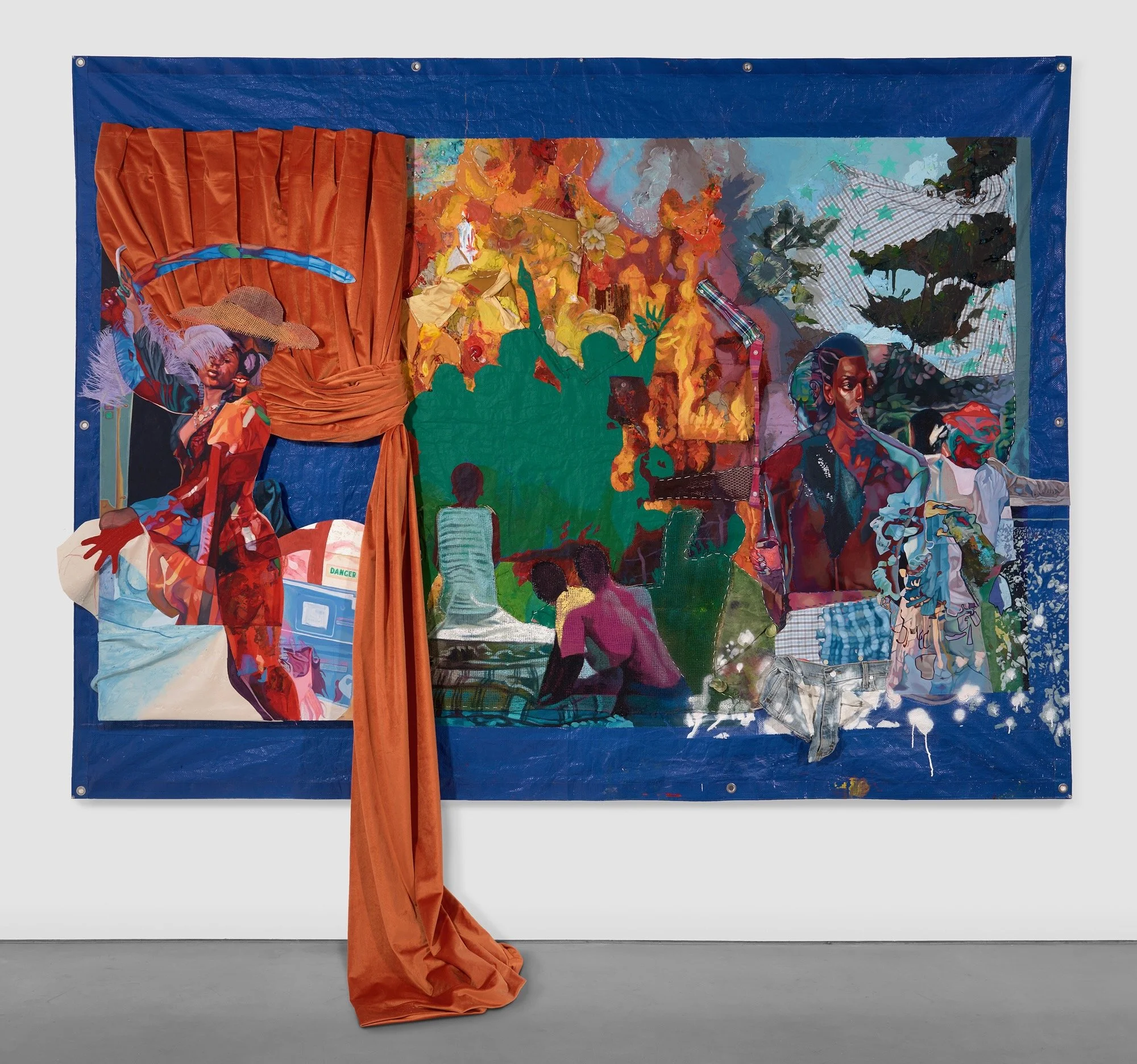
Migrating the Fire Next Time, 60 x 84 x 12”, acrylic, grandmothers pillow case, fabric, jewels, cotton, embroidery floss, burlap, spray paint, acrylic skin, wood, leather, oil pastel on tarp, 2026
About
Migrating the Fire Next Time examines Black migration not as a journey toward freedom, but as an ongoing practice of carrying freedom through hostile terrain. Drawing together Isabel de Olvera, the Great Migration, Hurricane Katrina, Haitian pilgrimage traditions, and personal relocation, the work asks what Black people carry when movement becomes a condition of survival. Against the backdrop of a burning house, figures gather resources, seek healing, witness destruction, and move forward, revealing that the promises attached to new frontiers have always existed alongside the anticipation of struggle.
Coordinates / References
“Remember that: i know how black it looks today, for you. it looked bad that day, too, yes, we were trembling. we have not stopped trembling yet, but if we have not loved each other none of us would have survived. and now you must survive because we love you, and For the sake of your children and your children’s children”
~James Baldwin, “The Fire Next Time”
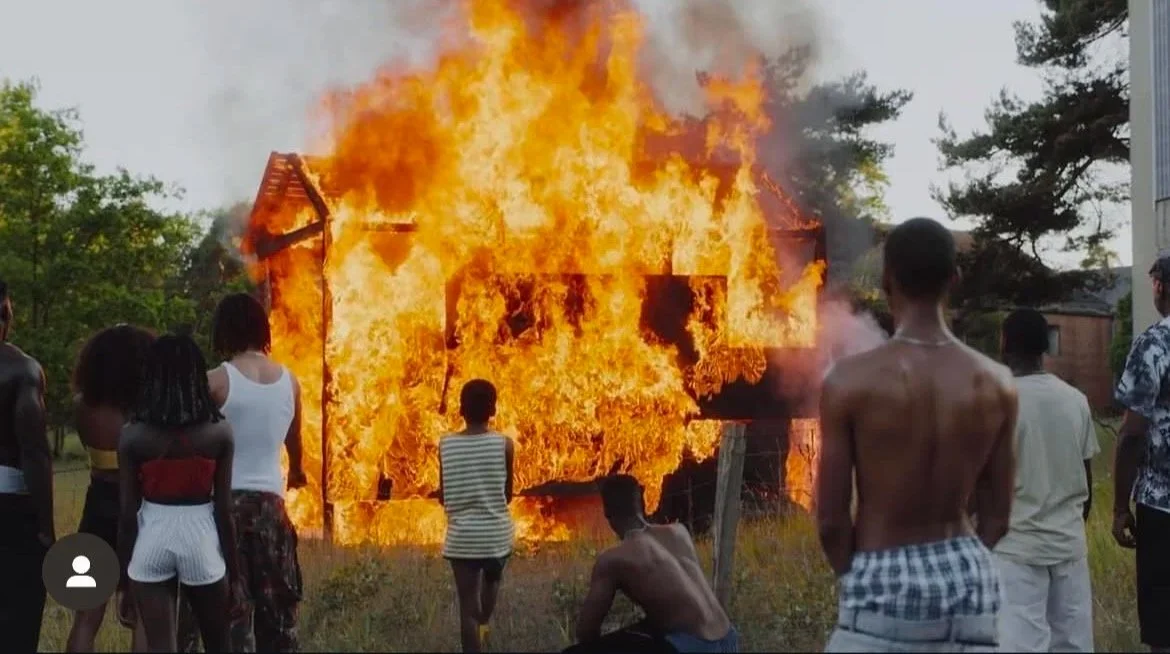
still from Kendric Lamar’s “Element”, directed by Jonas Lindstroem & The Little Homies
JAMES BALDWIN — THE FIRE NEXT TIME
The title comes from James Baldwin's The Fire Next Time, while the burning house at the center of the painting draws from Martin Luther King Jr.'s warning that Black Americans were integrating into a "burning house." Together, they establish the work's central tension: movement alone cannot guarantee liberation when the structures one enters remain unstable. The fire is not a singular event, but an enduring condition that each generation must learn to navigate.
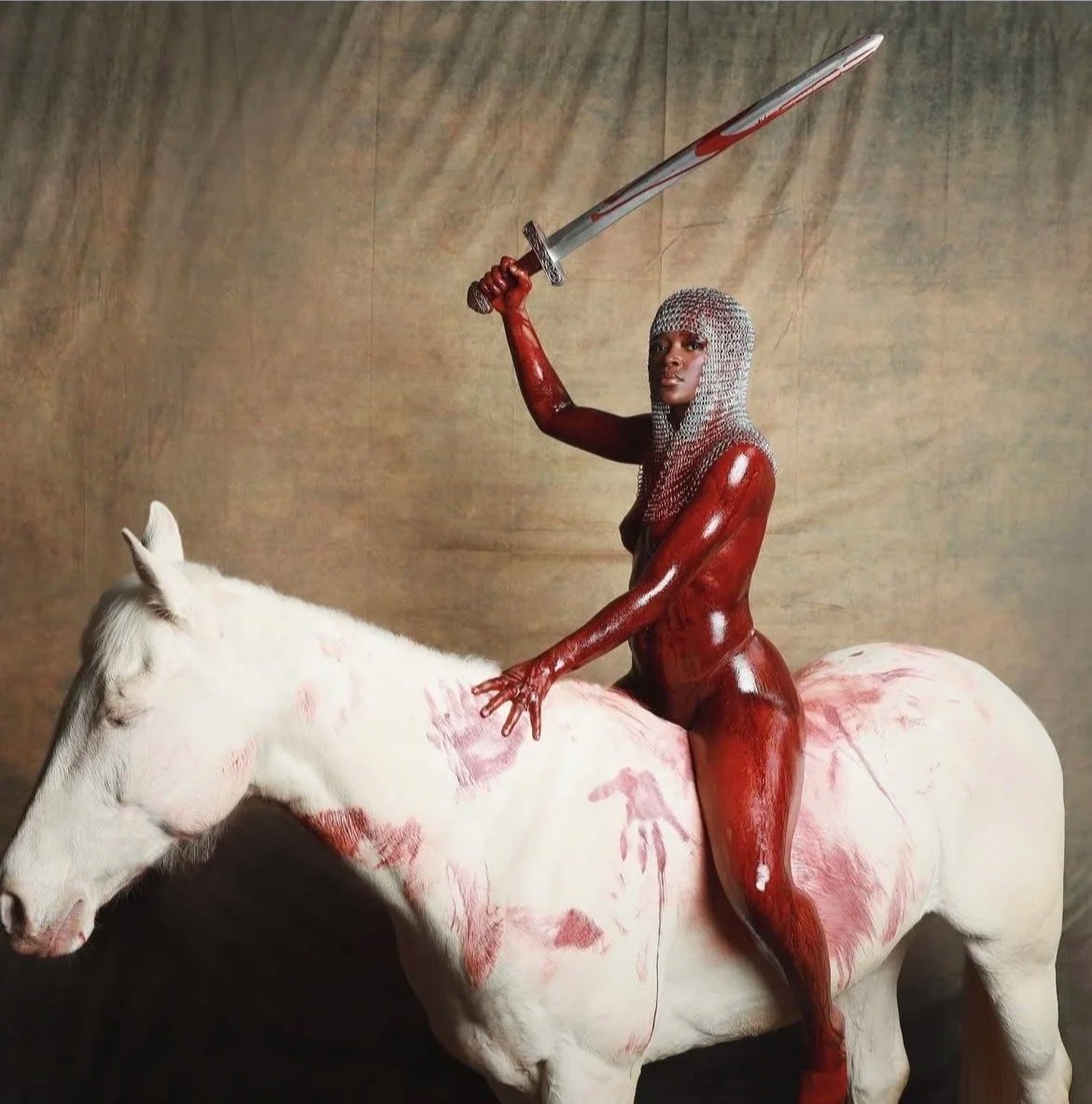
photo by: Delaney George (@by.delaneygeorge)
ISABEL DE OLVERA
Before traveling north into New Mexico in the early seventeenth century, Isabel de Olvera filed a legal affidavit declaring her status as a free Black woman, anticipating that the frontier might attempt to revoke her freedom. She understood that movement did not guarantee liberation; it simply introduced new forms of uncertainty. In the work, Isabel becomes a stand-in for generations of Black women who journeyed toward possibility while preparing for struggle.
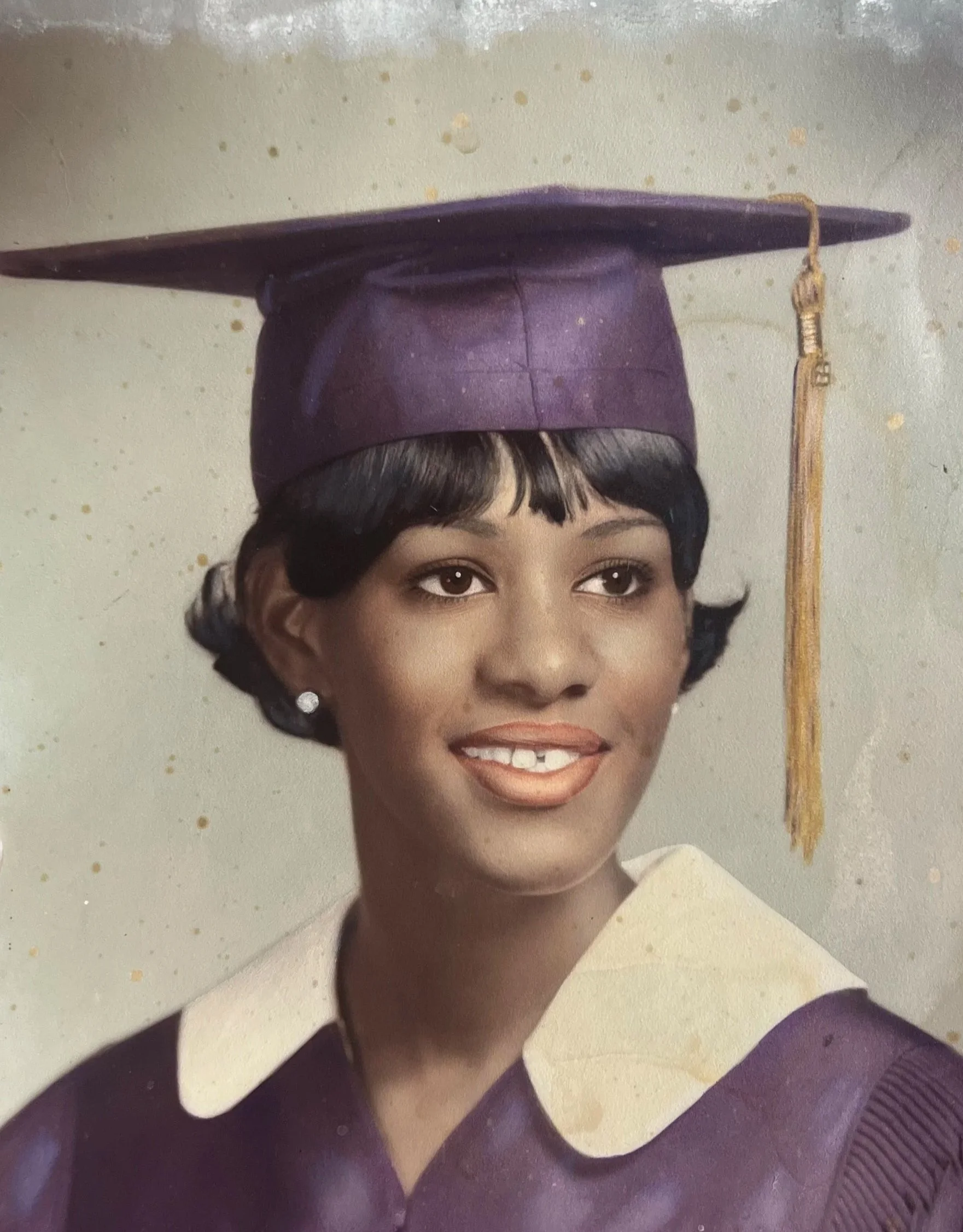
great-aunt, Leah Ward Fanuiel, grad pictures
She declared, “I am going on the expedition to New Mexico and have some reason to fear that I may be annoyed by some individual since I am a mulatta, and it is proper to protect my rights in such an eventuality by an affidavit showing that I am a free woman, unmarried, and the legitimate daughter of Hernando, a Negro, and an Indian named Magdalena.”
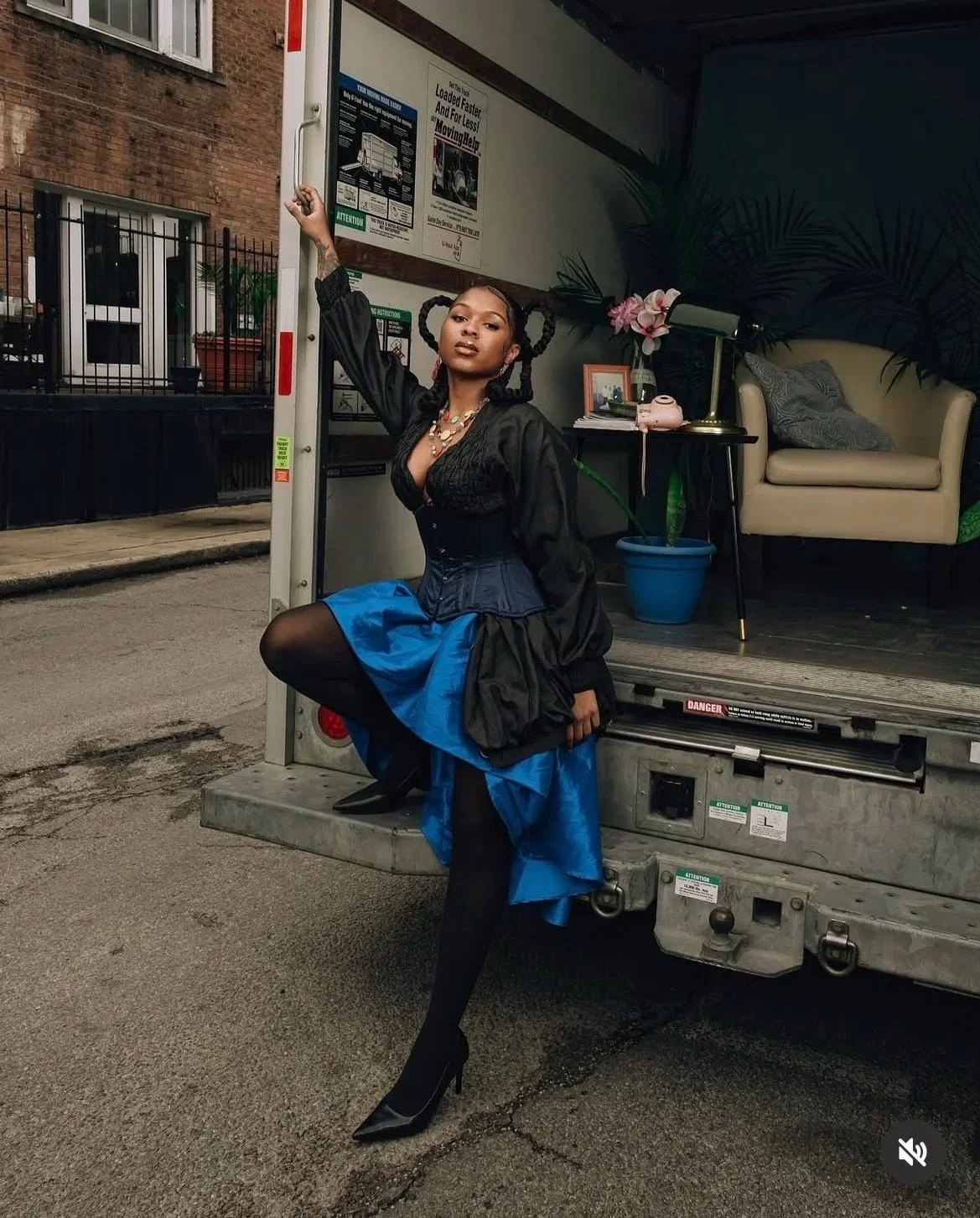
photo by: Simon Silva (@iamyoungbrown_) creative direction/model: Adore (@iadorekam)
THE GREAT MIGRATION
The Great Migration is often remembered as a story of escape and opportunity, but I am interested in the expectations people carried north alongside their belongings. My own move from the Gulf Coast to New Haven prompted me to reconsider the enduring myth of the North as a place of uncomplicated freedom. The work reflects on the ways racial inequality changes form while asking what it truly means to arrive.
HURRICANE KATRINA & BLACK SURVIVAL
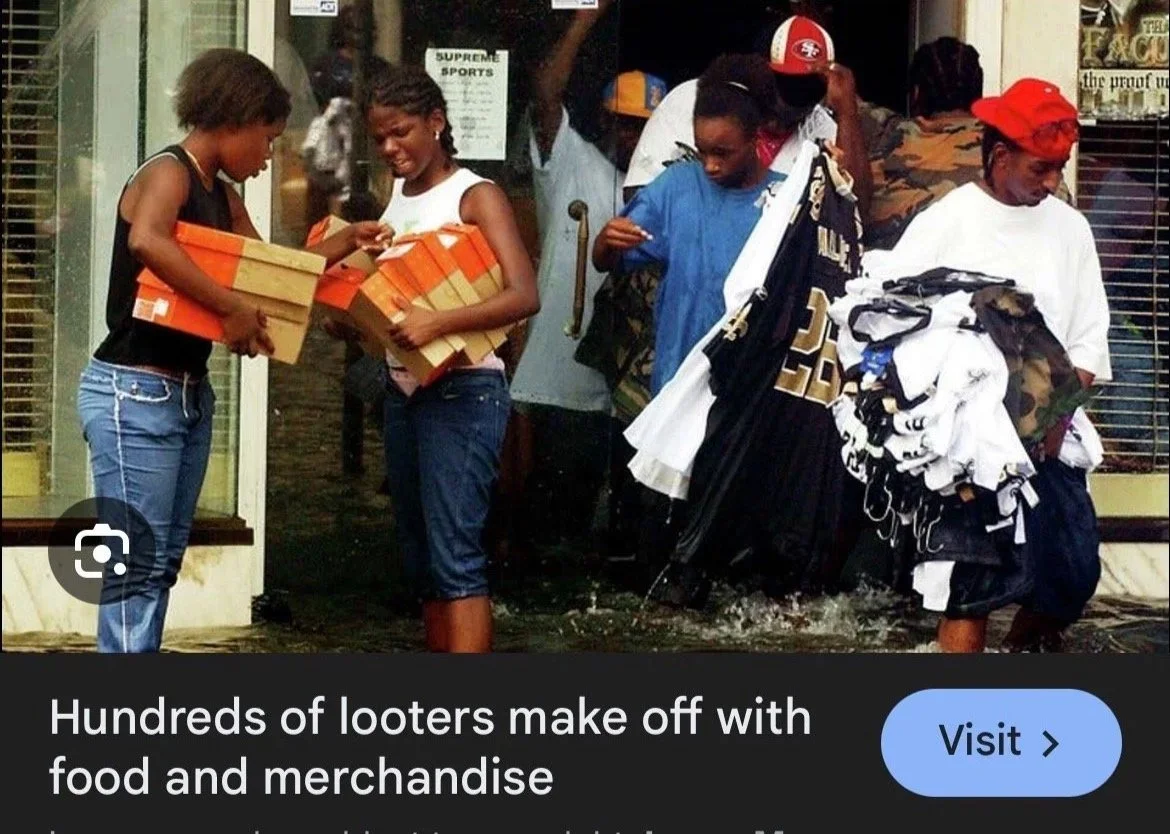
Hurricane Katrina exposed how quickly Black survival could be reframed as criminality. Images of families gathering food, water, and materials were recast as evidence of lawlessness, revealing how care and survival become suspect when enacted by Black communities. The figures gathering supplies in the painting ask viewers to reconsider who gets to define necessity, ownership, and survival.
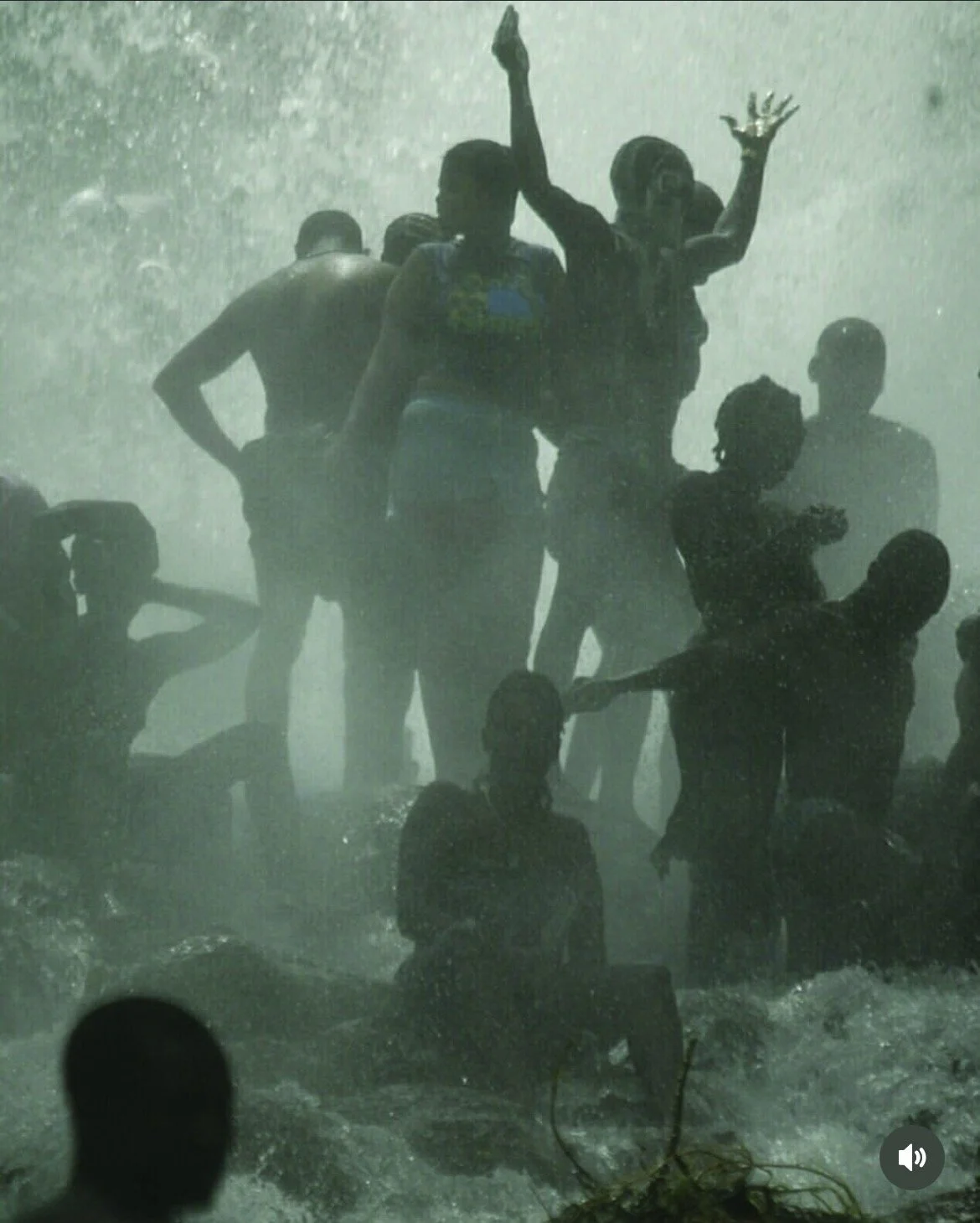
photo from Phyllis Galembo’s “Sodo: Haiti 1997-2001” series
HAITIAN PILGRIMAGE — SAUT-D'EAU
The green figures reference the annual pilgrimage to Saut-d'Eau, where water is understood as a site of healing, renewal, and spiritual protection. Painted with dirt and grass collected in New Haven, they connect sacred geographies across the African diaspora, suggesting that movement can also be a search for restoration rather than simply escape.
LAND & HOME
The quilted tarp is built from family textiles (my grandmother's pillowcases, my father's shirts and ties, my mother's collar) transforming the landscape into a family archive. Growing up along the Gulf Coast, hurricanes taught me that home can be both deeply rooted and profoundly fragile. The work asks what we carry when the places that shape us can no longer guarantee safety.
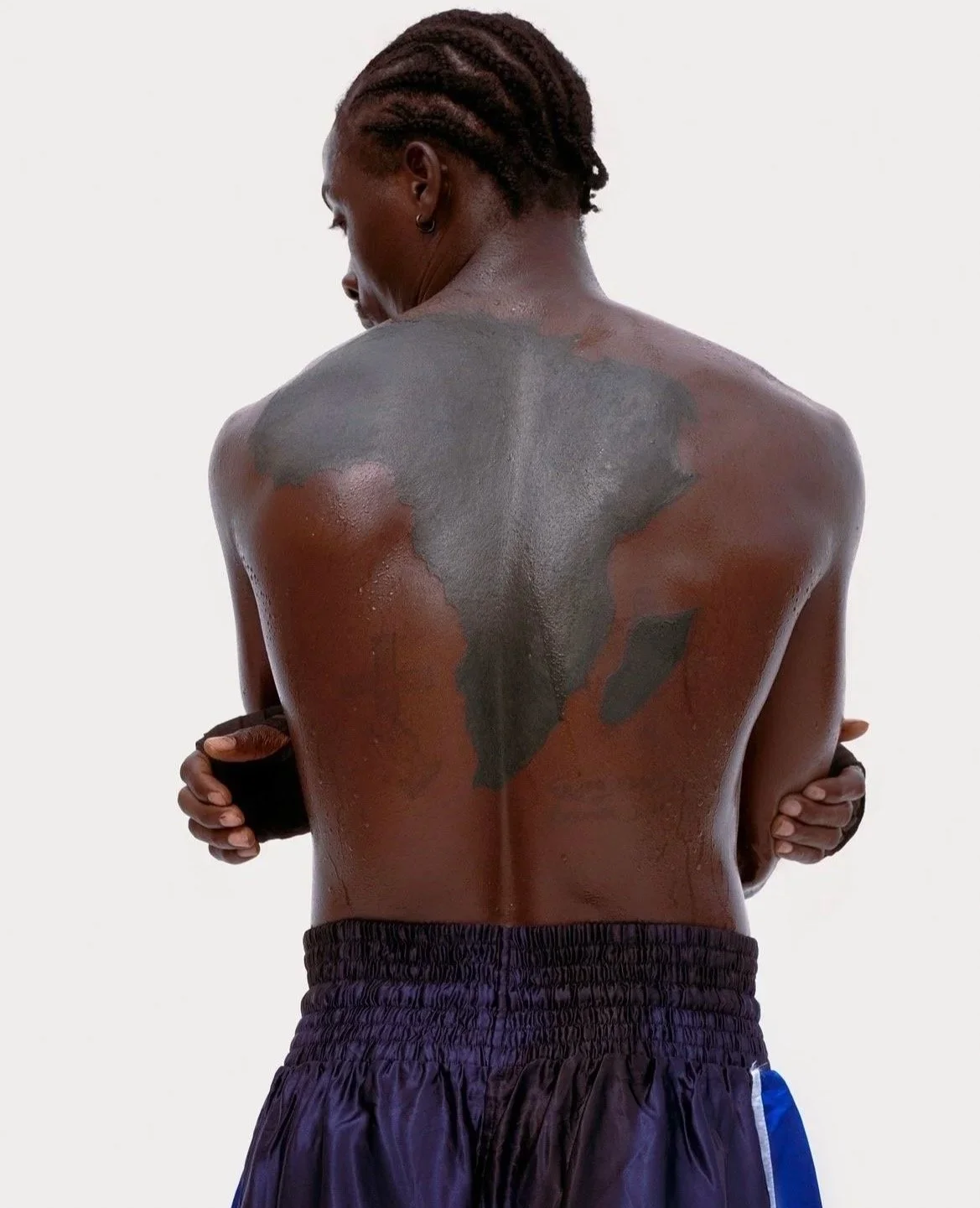
photo by: Victor Edeh (@eddehjr)