Captive Maternal
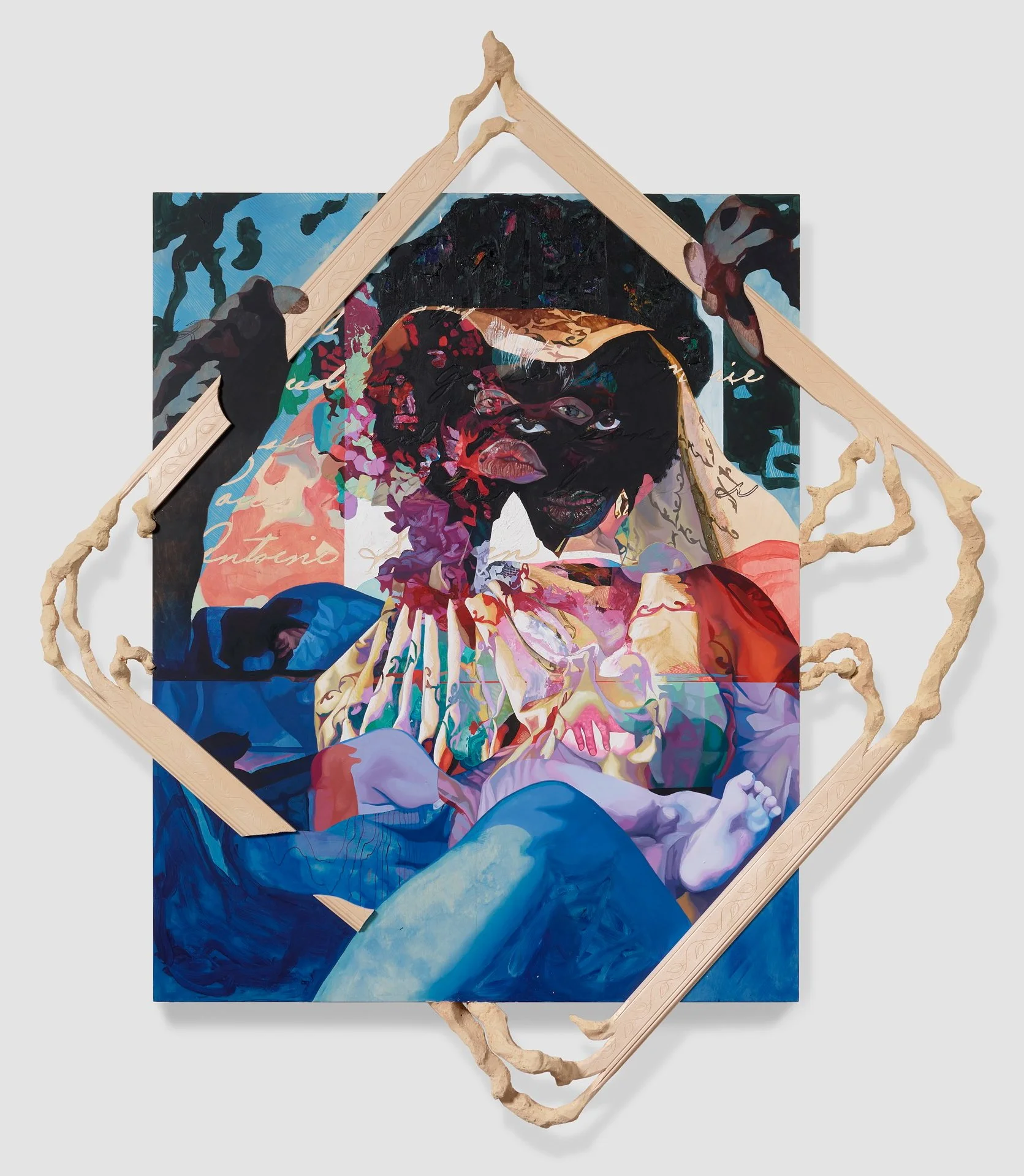
Captive Maternal, 72 × 82 × 6”, acrylic skins, oil, colored pencil, marker, carving on wood panel, baseboard, insulation foam
About
Captive Maternal examines the inheritance of freedom and responsibility across generations of Black women. Layering fragments of my maternal grandmother's photograph with the manumission record of my sixth great-grandmother Marie Magdalena Simien and reference to Assata Shakur, the work reflects on care as both a form of love and a strategy of survival. Suspended between captivity and self-possession, the central figure asks what freedom might look like for those expected to carry everyone else forward.
Coordinates/ References
Deniece Williams: “Free”
JOY JAMES — CAPTIVE MATERNAL
The title of this work comes from Dr. Joy James' concept of the "captive maternal," a figure defined less by identity than by the labor of sustaining life under conditions of captivity. For James, parenting is not simply a familial role but a political practice of protection, sacrifice, and resistance. This framework allows me to consider how generations of Black women have carried communities forward while navigating systems that continually limit their autonomy.
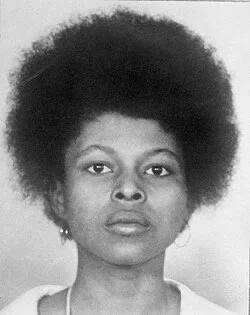
Assata Shakur 1971 mugshot
ASSATA SHAKUR — PASSING & FUGITIVITY
Assata Shakur's passing prompted me to think about freedom beyond the terms of the state. Her life in exile and her enduring fugitivity reveal how liberation can exist outside official recognition, while her death recalls a longer diasporic tradition in which death itself is sometimes imagined as release from captivity. In the work, Assata becomes a point of reflection on freedom as both a lived practice and an unfinished pursuit.
MY MOTHER'S DESIRE FOR FREEDOM
The work began with a simple thought: my mother wants to be free. Free from responsibility, from performance, and from having to make decisions that prioritize everyone but herself. Her desire became a way for me to think about the expectations placed on Black women and what freedom might look like beyond service, sacrifice, and care.
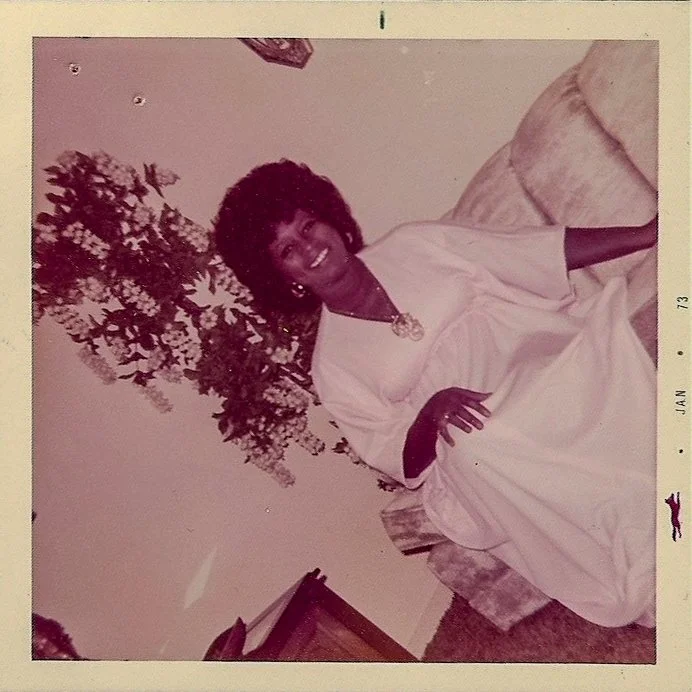
maternal grandmother, Maxine, pregnant with my mom
MARIE SIMIEN
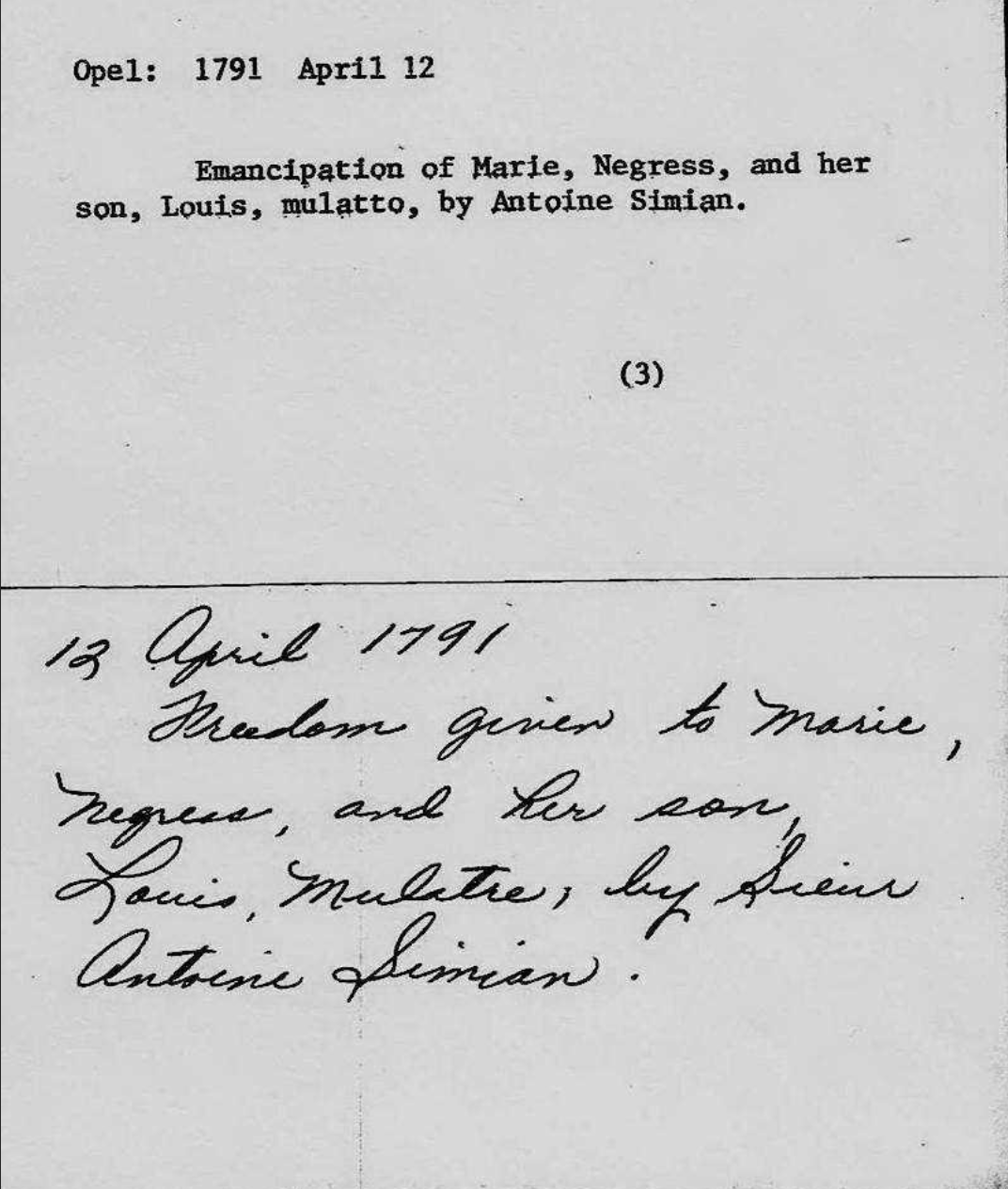
The engraving in the work reproduces the 1791 manumission of my sixth great-grandmother, Marie Magdalena Simien, and her son Louis. Her appearance in the archive reveals the contradictions of freedom in colonial Louisiana, where safety, autonomy, and family were often negotiated through systems designed to deny them. I am interested in how Black women like Marie transformed limited possibilities into strategies for securing futures for themselves and their children.
Etha Simien Amling portraying her ancestors, Marie Magdalena Lemelle Simien, at St. Landry Parish Women Hall of Fame event
Reading List
“Mulatta Concubine”
Lisa Ze Winters
“Assata”
Assata Shakur
“Black Feminist Hauntology”
Viviane Saleh-Hanna
Dr. Joy James
“Wicked Flesh”
Jessica Marie Johnson
“Venus in Two Acts”
Saidiya Hartman